
5 Everyday Habits That Could Be Damaging Your Teeth
October 11, 2026 9:00 amYou finish a drink and chew the ice without thinking, or reach for the toothbrush and scrub harder because one spot still feels rough. Habits damaging your teeth often happen while you’re doing something else. Over time, that repeated pressure or exposure can wear enamel, irritate gums, and put older fillings under strain.
At Karsch Family Dental in Farmington, Missouri, we look for the signs those habits leave on your teeth. Dr. Hallie Casteel can check a rough edge, a sensitive root, or a tooth that hurts when you bite. We also go over what you do during the day, so you can focus on changes that help protect the areas we find.
Habit 1: Chewing Ice and Biting Hard Objects
Ice puts a hard, uneven load on a tooth as you crunch through it. You may have done it for years without a problem, but one bite can still chip an edge or start a crack. If a large filling has left a thin section of tooth, that section may be less able to handle the pressure.
A pen cap or fingernail can put that pressure on a small part of a tooth as well. Tearing open a snack wrapper with your front teeth adds another chance to chip an edge. Keep scissors nearby for packaging, and put the pen down when you notice you’re biting it.
If you notice a rough edge or pain when biting, arrange a visit. Avoid repeatedly testing the spot with another hard object. We can examine the tooth and determine whether smoothing, repair, or protective treatment is needed.
Habit 2: Sipping Sugary or Acidic Drinks for Hours
A sweet drink beside your desk can keep supplying sugar from the first email to the last. Each sip gives plaque bacteria more sugar to turn into acids that remove minerals from enamel. Because those sips keep coming, saliva has less time to clear the sugar and neutralize the acid between them.
Some drinks also contain acids that soften enamel directly. A sugar-free soda or citrus-flavored drink can still do that, even though it supplies less sugar for plaque bacteria. If the same bottle stays beside you for hours, the repeated sips keep exposing your teeth after the first few have been swallowed.
Have sugary or acidic drinks with a meal when possible, then switch to water. Sip and swallow rather than swishing the drink around your teeth. After an acidic drink, rinse with water and wait about an hour before brushing so saliva has time to help the softened surface recover.
Habit 3: Scrubbing With Too Much Pressure
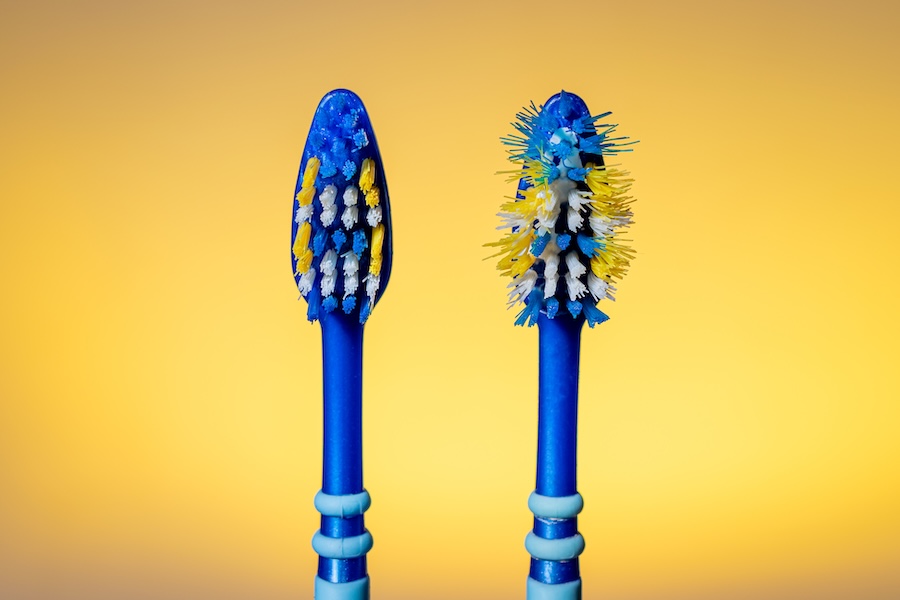
A hard brush or heavy scrubbing can irritate the gums and wear exposed tooth surfaces. Roots have a thinner covering than enamel, so they are more easily worn by that pressure. If the gumline feels tender or the bristles spread out well before replacement time, we can show you how to clean that area with less pressure.
Use a soft brush and gentle pressure, taking time to reach each surface along the gumline. If your brush bristles flatten quickly, ease up on how firmly you press. Some patients prefer an electric toothbrush, because it does the brushing while you drag it along the gumline. Many also have a pressure sensor, that kicks back at you when you push too hard. For either option, we can show you an angle and motion that cleans around your teeth and any exposed roots.
If one spot still feels rough after brushing, tartar may be stuck there. Once plaque hardens into tartar, a toothbrush can’t remove it, even with more pressure. We can clean the deposit professionally and show you how to limit the plaque that collects in that area afterward.
Habit 4: Skipping Cleaning Between the Teeth
The toothbrush cannot fully reach the sides where neighboring teeth meet. Plaque can remain there even when the visible surfaces look clean. Over time, that can contribute to cavities between teeth and gum inflammation.
When you clean between teeth, guide the floss or brush gently along the tooth surfaces. If a space is wider or dental work makes access difficult, a different tool may fit better. We can help select a brush size, floss technique, or water-flosser approach for those areas.
If floss keeps shredding beside the same filling, the edge may be rough or the contact unusually tight. Bleeding can also mean the nearby gum is inflamed. Continue gentle cleaning, and include that spot at your visit so we can check the tooth, filling, and gum together.
Habit 5: Holding Your Teeth Together While Concentrating
You may catch your teeth pressed together halfway through a difficult email or while sitting in traffic. The jaw muscles keep working even though there’s nothing to chew. Clenching can leave the muscles sore and teeth tender, and grinding or clenching may continue during sleep as well.
When you notice daytime clenching, allow the teeth to separate and the jaw to rest comfortably. Avoid deliberately forcing the jaw into a different position. If the habit continues overnight, we can examine the wear pattern and discuss whether protection is needed.
If you grind at night, a guard may help protect teeth from the pressure even though it may not stop the grinding. We check the worn areas and how your jaw feels before recommending one. If a guard you already wear leaves you more sore or changes how your teeth meet, bring it so we can check the fit.
Repairing Wear, Chips, and Cavities
A tooth can wear from grinding, acid exposure, or a combination of habits. We check the worn surfaces and bite and test any teeth that hurt with cold or chewing. We also inspect older fillings and crowns, since a thin tooth wall or damaged edge may be taking more pressure than it can handle.
For an exposed root, we may recommend sensitivity toothpaste or fluoride to help reduce the sting. A chip or cavity needs a repair, while a tooth weakened by a large filling may need a crown to support it. We explain the options alongside the habit that contributed, since the repaired tooth will face the same pressure if that habit continues.
If a tooth breaks or starts hurting when you bite, book a visit before putting more pressure on it. A small missing corner may leave a larger area weak underneath. Save any piece that comes out and avoid testing the tooth with crunchy food while waiting for care.
Habit and Tooth Wear Checks in Farmington
If you recognize one of these habits, you can bring it up without waiting for a tooth to break. Dr. Casteel can check the areas at risk and help you choose changes that fit the way you eat, work, and clean your teeth. Schedule a visit with our Karsch Family Dental team in Farmington, Missouri, and let’s help those everyday habits become easier on your mouth!
About UsCategorised in: Dental Tips, Preventive Dentistry