
Root Canal Therapy in Farmington, MO: When Tooth Pain Means the Tooth Can Be Saved
July 10, 2026 9:00 amTooth pain is not subtle for very long. It may start as a small warning when you drink something cold, then show up again when you chew on that side. Maybe it fades for a few days and then comes back stronger. Or perhaps it skips the polite stage altogether and turns into a deep ache that makes the whole side of your mouth feel off.
When that happens, many people jump straight to the worst-case thought: “Is this tooth going to have to come out?” If the tooth has hurt for a while, or if you have been told there is an infection, extraction may sound like the next step. However, pain is not always a sign that the tooth is beyond repair.
In many cases, tooth pain means the nerve inside the tooth is inflamed or infected. If the tooth still has enough structure above the gumline, stable roots, and enough support in the surrounding bone, root canal therapy may be able to treat the source of the pain while keeping the tooth in place.
At Karsch Family Dental in Farmington, MO, Dr. Hallie Casteel can examine the tooth, take X-rays when needed, and explain whether root canal therapy may be a good option. The decision is not based only on how much the tooth hurts. Instead, it depends on what is happening inside the tooth and whether it can be restored after treatment.
Tooth Pain Does Not Always Mean Extraction
A painful tooth can feel like it has reached the end of the road. Even so, the amount of pain does not always match the actual condition of the tooth. Some teeth hurt intensely because the nerve is inflamed, yet the root and surrounding bone are still strong enough to support treatment. Meanwhile, another tooth may cause very little pain but have a crack or bone loss that makes saving it less predictable.
At an exam, Dr. Casteel can look for decay, cracks, swelling, bite pressure, old dental work, and changes around the root. In addition, X-rays can show whether there is an infection at the tip of the root, how deep decay goes, and whether the bone around the tooth looks healthy enough to support it.
If the problem is mainly inside the tooth, root canal therapy may remove the infected or irritated tissue without removing the whole tooth. However, if the tooth is split, loose, or too broken down to rebuild, extraction may be the more realistic option.
Rather than using pain alone as the deciding factor, the visit helps answer a more specific question: can this tooth be cleaned out, sealed, and restored in a way that will hold up?
How a Tooth Gets to the Point of Needing a Root Canal
A tooth can need root canal therapy for several reasons, and it is not always because someone ignored a problem. Sometimes decay forms under an old filling or crown where it is hard to see. Sometimes a crack lets bacteria reach the inside of the tooth. Other times, a tooth is injured years earlier and the nerve slowly becomes irritated or dies.
Inside each tooth is pulp tissue, which contains nerves and blood vessels. When that tissue becomes inflamed, the tooth may start reacting to temperature, sweets, pressure, or chewing. At first, the symptoms may come and go. Then, as the irritation gets worse, the pain may linger longer or become harder to predict.
Once bacteria reach the pulp, infection can move through the root canal system and toward the bone around the root tip. As a result, swelling, tenderness, a pimple-like bump on the gum, or a bad taste may appear.
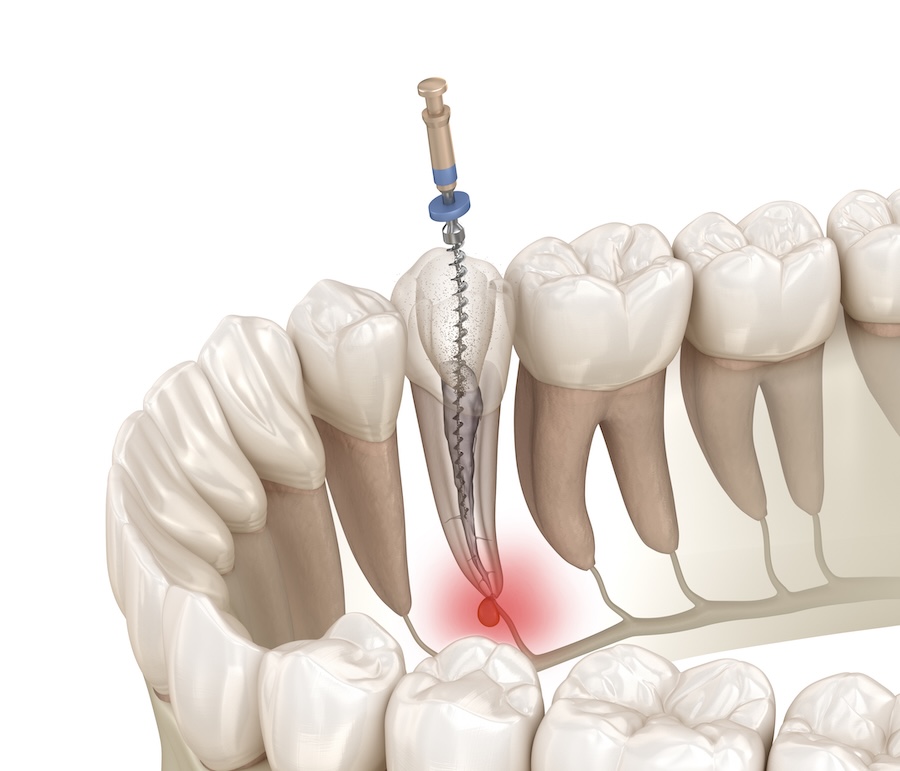
A root canal removes the damaged pulp from inside the tooth. After that, the canals are cleaned, shaped, sealed, and the tooth is restored. The outside of the tooth remains in place, which is why root canal therapy can sometimes save a tooth that would otherwise seem headed for extraction.
Pain Patterns Worth Paying Attention To
Tooth sensitivity can happen for many reasons, including gum recession, enamel wear, clenching, a small cavity, or a recent dental procedure. However, certain patterns are more concerning than a quick twinge.
Lingering pain after hot or cold drinks is one of those patterns. If cold water causes a brief zing that disappears quickly, the cause may be sensitivity or an exposed root surface. However, if the ache stays after the drink is gone, the nerve may be inflamed.
Pain when biting is another sign to take seriously. You may notice it with crunchy foods, meat, bread, or anything that puts pressure on one area. Sometimes the tooth feels sore afterward, almost like it has been bruised.
Swelling, a pimple on the gum, a bad taste, or tenderness in the jaw near one tooth can also point to infection. In some cases, the pain may suddenly fade because the nerve inside the tooth has died. Even then, the infection may still be present.
When symptoms linger, change, or keep returning, it is better to have the tooth checked before the problem narrows your options.
Why Keeping the Natural Tooth Can Help Your Bite
A natural tooth is built into your bite in a way that is hard to fully duplicate. It has a root in the jawbone, a crown above the gums, and contact with the teeth beside and across from it. When it is healthy enough to keep, saving it can help preserve the way your mouth functions.
If a tooth is removed and not replaced, nearby teeth can begin shifting toward the open space. The tooth above or below may also move because it no longer has a chewing partner. As those changes build, your bite may feel different, and food may start getting caught in places that did not bother you before.
Chewing can gradually change as well, especially when a molar is removed. You may start favoring the other side without noticing, which can place extra pressure on other teeth, fillings, crowns, or jaw muscles.
Tooth replacement options such as implants, bridges, and partial dentures can be very helpful when a tooth cannot be saved. However, they involve their own planning, timing, maintenance, and cost. Because of that, when root canal therapy gives the natural tooth a good outlook, keeping it may be the more practical long-term choice.
What Makes a Tooth a Good Candidate for Root Canal Therapy
Not every painful tooth is a good root canal candidate. Dr. Casteel will look at whether there is enough tooth structure left to restore, whether the root is stable, and whether the surrounding bone can support the tooth.
The location of the tooth also plays a role. Back teeth take more chewing force, so they often need a crown after root canal therapy. If there is not enough healthy structure left for a crown to hold properly, the long-term outlook may be weaker.
The size and direction of a crack can change the recommendation too. A small crack in the crown of the tooth may be treatable. However, a crack that extends down the root can make the tooth much harder to save.
The gums and bone around the tooth are part of the decision as well. For example, if the tooth has severe bone loss from gum disease, root canal therapy may remove infection from inside the tooth but still leave the tooth without enough support.
Because of these details, the recommendation comes from the full picture: symptoms, exam findings, X-rays, tooth structure, bone support, and the restoration needed afterward.
What Happens During Root Canal Therapy
Root canal therapy begins with numbing the tooth and surrounding area. Once the tooth is numb, Dr. Casteel creates a small opening in the tooth to reach the pulp chamber and canals.
Next, the infected or inflamed tissue is removed from inside the tooth. Then the canals are cleaned, shaped, and disinfected. After that, the space is sealed to help prevent bacteria from re-entering.
Depending on the tooth, the infection, and the final restoration plan, treatment may be completed in one visit or more than one appointment. Some teeth have simple canal anatomy, while others have narrow, curved, or multiple canals that take more time.
After the root canal is complete, the tooth needs to be restored. In many cases, especially with molars and premolars, that means placing a crown. A crown helps protect the remaining tooth structure and allows the tooth to handle chewing more reliably.
Why the Crown Is Often Part of the Plan
A root canal treats the inside of the tooth, but it does not make a weakened tooth stronger on its own. Many teeth that need root canals already have large cavities, cracks, old fillings, or missing tooth structure before treatment even starts.
Because of that, a crown is often recommended after root canal therapy. The crown covers the tooth, helps distribute biting force, and lowers the risk of the tooth cracking later. This is especially important for back teeth because they handle heavier chewing.
Skipping a recommended crown can leave the tooth vulnerable. The infection may be treated, but the remaining tooth structure may still be thin or weak. Over time, normal chewing can place enough force on the tooth to fracture it.
For some front teeth, a filling may be enough if plenty of healthy structure remains. For many back teeth, though, the crown is part of helping the root canal-treated tooth keep functioning.
When Extraction May Be the More Realistic Option
Sometimes saving the tooth is not the strongest plan. If the tooth is cracked down into the root, badly broken below the gumline, severely loose, or surrounded by major bone loss, extraction may be recommended.
In other cases, decay may have destroyed so much of the tooth that there is not enough structure to rebuild. A root canal could remove the infected tissue, but the tooth may not have enough remaining strength to hold a filling or crown.
If extraction is recommended, the next conversation should include what happens to the space. Some missing teeth should be replaced to protect chewing, spacing, and bite balance. Depending on the area, options may include a dental implant, bridge, or partial denture.
The timing of replacement can vary. For instance, bone grafting or a future implant plan may be discussed around the time of extraction. In other cases, the first step is removing the infected tooth and allowing the area to heal before making the next decision.
How the Visit Helps Sort Out the Options
When you come in with tooth pain, the visit helps separate one possible cause from another. A cracked tooth, gum abscess, sinus pressure, deep cavity, bite problem, and infected nerve can feel similar at first, but the treatment may be very different.
Dr. Casteel may ask when the pain started, what triggers it, whether it lingers, and whether the tooth hurts when you bite. She may also check the gums, tap on the tooth, test temperature response, look at old fillings or crowns, and take X-rays.
Together, those details help show whether the tooth can likely be saved or whether removal would give a more predictable result. If the tooth has enough support, root canal therapy may be an option. If the tooth is cracked, loose, or too broken down, extraction may be the better path.
From there, Dr. Casteel can explain whether root canal therapy, extraction, a crown, a filling, gum treatment, or monitoring makes sense for the tooth causing the problem.
Questions to Ask if You Are Worried About Losing the Tooth
If you are worried that a painful tooth may need to be removed, a few direct questions can make the conversation more practical. You might ask:
- Does the X-ray show infection near the root?
- Is the tooth cracked, or is the problem mainly inside the tooth?
- Is there enough healthy tooth left for a crown?
- If I have a root canal, what will the tooth need afterward?
- If the tooth is removed, should the space be replaced?
- What are the risks of waiting?
- Which option has the better long-term outlook for this tooth?
These questions can help you compare the choices beyond the immediate appointment. Root canal therapy may cost more upfront than extraction, especially if a crown is needed. However, extraction can bring replacement costs later. On the other hand, if the tooth has a poor outlook, removing it may be the more predictable choice. Dr. Casteel can explain what she sees and how that affects the recommendation.
Root Canal Therapy at Karsch Family Dental in Farmington, MO
Tooth pain does not always mean a tooth needs to be removed. Sometimes it means the inside of the tooth needs treatment before the damage spreads further. If the tooth still has enough structure and support, root canal therapy may help preserve it and keep it working in your bite.
At Karsch Family Dental in Farmington, MO, Dr. Hallie Casteel can examine the tooth, review X-rays, and explain whether root canal therapy may help save it. Call Karsch Family Dental to schedule a visit if you have lingering tooth pain, swelling, biting sensitivity, or a tooth you are worried may need to be extracted.
About UsCategorised in: Restorative Dentistry, Root Canal Therapy